
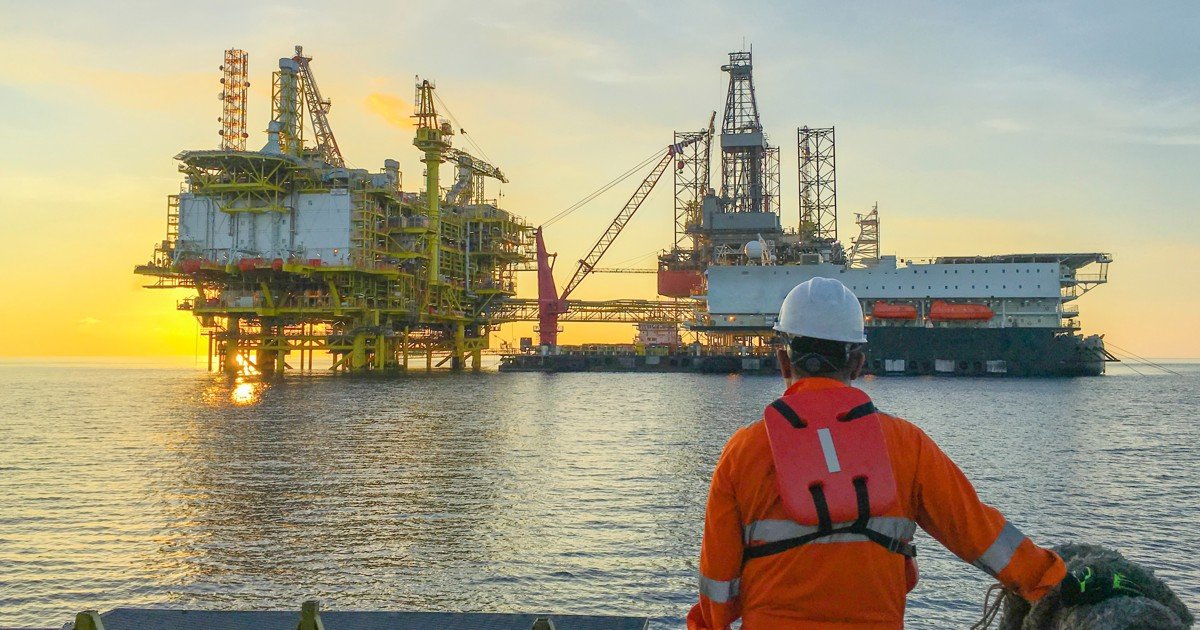
Seawater is one of the most corrosive environments any piping system will face — high chloride content, dissolved oxygen, and biofouling organisms combine to attack most common piping alloys within a few years of service. Copper-nickel 90/10 (UNS C70600) has become the default material for seawater piping precisely because it resists all three mechanisms at once, and forged CuNi 90/10 fittings are what make that resistance continuous through every elbow, tee and branch connection in the system.
Why Seawater Destroys Ordinary Piping Materials
Carbon steel and even many stainless grades struggle in seawater service. Chlorides attack the passive oxide layer that stainless steels rely on, leading to pitting and crevice corrosion at welds, flanges and fittings. Carbon steel simply corrodes outright, and galvanized coatings degrade within a few seasons of continuous immersion. For any piping system carrying raw or treated seawater — cooling water, ballast, firefighting mains — the fittings are usually the first point of failure, since they concentrate stress, turbulence and, in dissimilar-metal installations, galvanic activity.
How CuNi 90/10 Resists Corrosion and Biofouling
CuNi 90/10's resistance comes from two things working together. First, the alloy forms a thin, adherent cuprous oxide film on exposed surfaces that self-heals when scratched or eroded, unlike the passive films on stainless steel which fail catastrophically once breached. Second, the controlled iron content (typically 1.0–1.8%) in the alloy improves resistance to erosion-corrosion in flowing seawater, which is why fitting manufacturers hold iron content within a tight band rather than treating it as a trace element.
There's a secondary benefit that matters just as much operationally: copper ions released from the surface film are mildly toxic to marine organisms, which significantly slows biofouling compared to steel or stainless piping. Cooling systems in particular benefit from this — less biofouling means more consistent heat transfer and fewer maintenance shutdowns to clear intake strainers and condenser tubes.
Where CuNi 90/10 Forged Fittings Are Specified
- →Seawater cooling systems — main and auxiliary engine cooling loops aboard vessels, and once-through cooling systems on offshore platforms and coastal power plants.
- →Ballast piping — tanks and transfer lines exposed to seawater intake and discharge cycles throughout a vessel's operating life.
- →Firefighting mains — seawater-fed fire suppression rings on ships and offshore platforms, where reliability after years of stagnant, unused service is critical.
- →Desalination intake & pretreatment lines — raw seawater intake piping ahead of reverse osmosis or thermal desalination trains.
- →Offshore platform utility piping — general seawater utility and washdown systems on fixed and floating platforms.
Fitting Types Commonly Used in Marine Retrofits
Marine piping runs are typically small-to-medium bore, which makes socket weld fittings the most common choice for permanent, high-pressure sections such as cooling water risers — the fillet weld gives a compact, leak-tight joint without the bulk of a butt weld. Threaded fittings tend to appear on smaller utility lines and instrumentation tie-ins where a joint may need to be broken for maintenance without cutting into a welded run. For branch connections off larger seawater mains, weldolets and sockolets are favored over fabricated branch connections because the integral reinforcement holds up better under the cyclic pressure and vibration typical of a vessel or platform.
Installation Considerations for Shipyards
CuNi 90/10 welds differently from carbon steel — lower thermal conductivity than you'd expect from a copper alloy, combined with a tendency toward hot cracking if filler metal and heat input aren't controlled. Most shipyards and fabricators use matched CuNi filler wire and keep interpass temperatures low to avoid grain coarsening near the fusion zone. Because of this, fittings machined and forged specifically for CuNi — with consistent wall thickness and properly prepared bevels — make a measurable difference to weld quality compared to fittings adapted from other alloy families.
In short: CuNi 90/10's combination of self-healing corrosion resistance, biofouling suppression and proven weldability is why it remains the default seawater piping alloy nearly everywhere marine and offshore corrosion resistance matters — and why the fitting, not just the pipe, needs to be forged from the same alloy family.